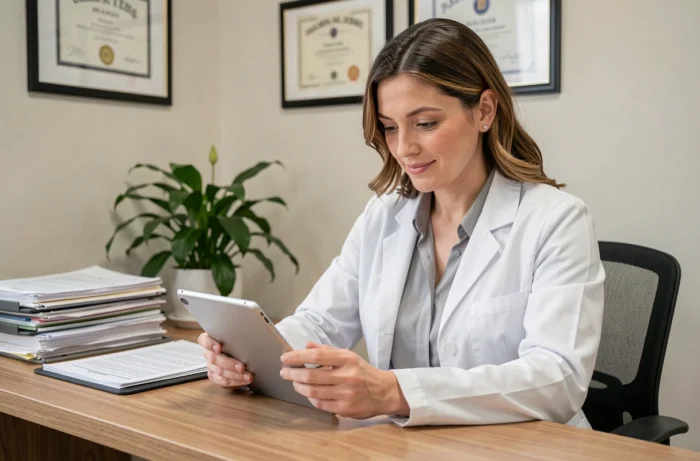
When a healthcare professional seeks to structure their activity, they often encounter an invisible problem: data management, regulatory compliance, and patient follow-up take as much time as the consultations themselves. Bee Healthy’s professional services start from this observation to propose a framework that addresses these aspects proactively, not reactively.
GDPR Compliance and Health Data Security at Bee Healthy
Compliance is often reduced to a legal mention at the bottom of the page. However, the difference lies in the technical details of its daily implementation.
A practitioner collecting information about their patients handles health data classified as sensitive by the GDPR. This means that every form, every digital exchange, and every consultation history must comply with strict rules for collection, storage, and transmission.
For a professional, compliance translates into several simultaneous requirements:
- A certified secure hosting for health data, distinct from standard web hosting, with encryption of exchanges between the practitioner and the patient.
- Explicit patient consent before any collection, with traceability of this consent within the system.
- A limited retention policy, with automatic deletion or archiving in accordance with the expiration of the legal timeframe.
This framework may seem burdensome. In practice, Bee Healthy’s professional services integrate these constraints directly into their tools, which prevents the practitioner from manually managing each obligation. The gain is not measured in additional features, but in avoided legal risks.

Continuous Patient Follow-Up and Abandonment of the One-Time Model
The classic health model relies on isolated consultations. The patient comes in, leaves with recommendations, and then returns several weeks later. In between, nothing.
This gap poses a concrete problem: the practitioner has no visibility on actual adherence. Did the patient follow the nutritional protocol? Did they experience any side effects? Without intermediate feedback, the next consultation often starts from scratch.
The approach that is becoming widespread in the sector, and which Bee Healthy structures for professionals, is based on a continuous journey. This does not mean monitoring the patient constantly. It means creating regular touchpoints between two appointments.
What a Dedicated Patient Portal Changes
A patient portal allows the professional to send personalized recommendations after each consultation. The patient accesses it from their phone, reviews their program, and can report any difficulties.
For the practitioner, the advantage is twofold. They obtain concrete information before the next consultation. They adjust their protocol without wasting time reconstructing the history. Follow-up becomes a flow, not a series of disconnected events.
This model requires a reliable technical infrastructure. This is precisely where the issue of secure exchanges intersects with that of follow-up: every message, every piece of data transmitted via the portal must pass through a compliant environment.
Reducing Administrative Burden for Healthcare Practitioners
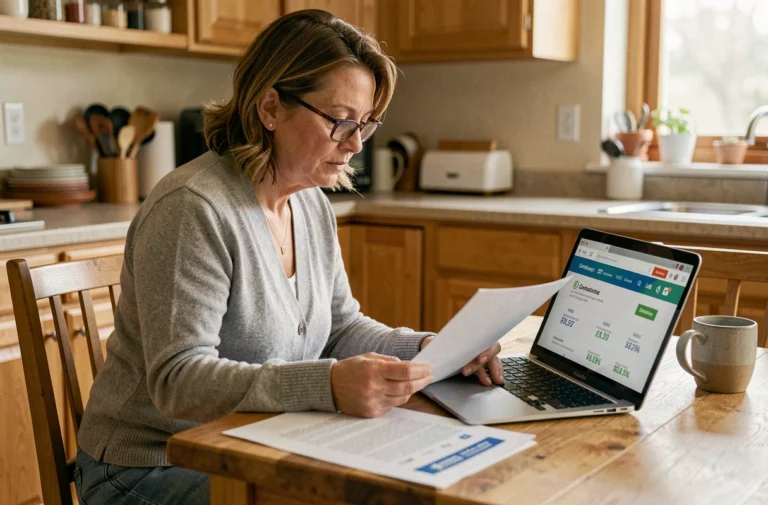
Why does this topic deserve separate treatment? Because the administrative burden is the primary cause of time loss cited by healthcare professionals in private practice. Billing, reminders, appointment management, archiving: these tasks add no clinical value but consume a significant portion of the day.
Bee Healthy addresses this issue through targeted automation. Not total automation (which would pose control issues), but automation of repetitive low-value tasks.
Concrete Examples of Time Savings
Take billing, for example. In a traditional practice, the practitioner manually enters each procedure, checks the coding, and then submits it to the payer. With an integrated tool, the coding is pre-filled based on the selected type of consultation. The practitioner validates, and the system transmits.
Another example: managing appointment reminders. An automatic SMS or email sends reduces the rate of missed appointments. Fewer lost slots, less rescheduling.
These gains may seem modest when considered in isolation. Cumulatively over a workweek, they free up several hours that the practitioner can reinvest in clinical care or prevention.

Personalized Protocols and Scientific Credibility in Health Practice
A common criticism directed at health service platforms: they offer generic tools, identical regardless of the patient’s profile or the practitioner’s specialty. The result is a standardized support that does not correspond to any specific clinical reality.
Some players in the sector are now structuring their offerings around protocols validated by a scientific committee. The idea is not to replace the clinical judgment of the practitioner, but to provide them with adaptable reference frameworks.
In concrete terms, this translates into patient journeys built from evidence-based data, which the professional can adjust according to the context. A nutritherapist supporting a diabetic patient does not use the same protocol as a practitioner specializing in stress management. Personalization is based on scientific foundations, not on subjective preferences.
This approach also enhances the practitioner’s credibility with their patients. When a follow-up program relies on documented protocols, the patient better understands the process. Adherence to the care pathway improves, and dropouts along the way decrease.
The choice of a professional service provider hinges on their ability to simultaneously cover regulatory compliance, structured patient follow-up, and the reduction of administrative tasks, without creating new burdens for the practitioner.