The odometer of a 125 scooter rarely displays a figure as simple as a threshold not to be exceeded. Between a well-maintained Japanese model and a Chinese scooter mishandled in the city, the longevity gap can range from simple to triple. To assess how far a 125 can go, one must consider the type of engine, actual usage, and maintenance rigor, three variables whose respective weight changes depending on each configuration.
Mileage of a 125 scooter according to usage type: the real gaps
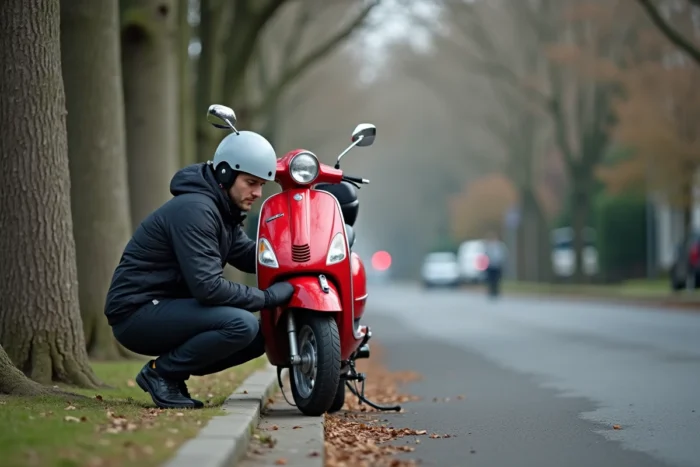
An urban 125 scooter and a touring 125 motorcycle do not age in the same way. Short cold trips, frequent restarts, and prolonged stops in traffic put much more strain on the engine, transmission, and cooling system than smooth riding on the road.
| Type of usage | High mileage threshold | Dominant wear factors |
|---|---|---|
| Urban scooter (short trips, stop-and-go) | Beyond 40,000 km | Variator, belt, clutch, cooling |
| Touring 125 motorcycle (mixed or long trips) | Significantly higher thresholds with regular maintenance | Chain, tires, engine oil, brakes |
| Mixed usage (city + road, medium trips) | Intermediate, variable depending on the city/road ratio | Transmission + tires |
The 2026 used guide classifies an urban 125 scooter as heavily used from 40,000 km. For a classic 125 motorcycle, this threshold is significantly higher if maintenance has been regular. This discrepancy is explained by the nature of mechanical constraints: an engine that runs for long periods at low revs in the city accumulates more combustion residues and thermal stress than an engine that is used at a stabilized speed on the road.
Competitor data confirms this trend: a properly maintained 125 scooter generally lasts between 30,000 and 50,000 km without major intervention. On brands like Honda, Yamaha, or Suzuki, some owners reach six figures on the odometer. To delve deeper into the issue of mileage and lifespan of a 125 scooter, the intersection of brand, usage, and maintenance history remains the determining trio.

Belt, rollers, and variator: the parts that set the real limit
The mileage displayed on the odometer tells only part of the story. On a 125 scooter with automatic transmission, the transmission belt and variator rollers are the most critical wear components, and their lifespan must be monitored independently of oil changes.
The belt transmits power from the engine to the rear wheel. When it wears out, it slips, heats up, and eventually breaks, sometimes without warning. The rollers, on the other hand, flatten over time and degrade the variator’s acceleration. A set of worn rollers results in a loss of responsiveness and increased fuel consumption.
- The transmission belt should be replaced according to a schedule defined by the manufacturer, often well before the engine itself shows signs of fatigue. Ignoring this replacement exposes one to sudden breakage while riding.
- The variator rollers lose their spherical shape over the kilometers. Regular replacement maintains transmission performance and reduces strain on the engine.
- The air filter and engine oil remain the basics, but limited maintenance to oil changes does not protect the transmission, which is the weak link of the 125 scooter.
On recent models, these parts are accessible and relatively inexpensive. The trap is forgetting them because the engine still runs well. A scooter can show a healthy engine at 35,000 km and a transmission at the end of its life.
Tire pressure and cooling: two underestimated parameters
The mechanical longevity of a 125 scooter does not depend solely on what happens in the engine or transmission. Two peripheral parameters directly influence overall wear: tire pressure and thermal management of the engine.
Tire pressure adapted to load
Under-inflated tires increase rolling resistance, forcing the engine to work harder. Fuel consumption rises, temperature increases, and tire wear accelerates asymmetrically. Pressure should be checked regularly and adjusted according to the load, especially when carrying a passenger or a loaded top case.
Cooling and prolonged stops
Air-cooled 125 scooters are particularly vulnerable to prolonged traffic jams. Without airflow around the engine, the temperature rises and accelerates wear on the rings, gaskets, and oil. Prolonged periods at idle with the engine running degrade the engine faster than riding itself.
The 2026 maintenance guides also recommend avoiding extremes of electrical load (permanently connected accessories) and prolonged exposure to heat when parked. These factors do not show up on the odometer, but they weigh on actual longevity.
Used 125 scooter: reading beyond the odometer
When purchasing a used 125 scooter, mileage alone is not enough to assess mechanical condition. A poorly maintained scooter at 25,000 km is worth less than a model at 45,000 km with a complete service record.
The key points to check first:
- The history of belt and roller replacements, with invoices or mechanic’s certification.
- The condition of the tires and the regularity of pressure checks, which reflect the overall care given to the vehicle.
- The color and level of engine oil: black and thick oil indicates neglected maintenance, regardless of the displayed mileage.
- The behavior of the variator during acceleration: an irregular increase in revs betrays worn rollers or a tired belt.
Japanese brands (Honda, Yamaha, Suzuki) maintain a reputation for long-term reliability, but this robustness does not exempt one from rigorous monitoring. A Honda PCX at 50,000 km with documented maintenance remains a better choice than a generic model at 15,000 km without history.
The mileage of a 125 scooter is not read the same way as that of a car. The automatic transmission, air cooling, and small engine size create specific wear points that cannot be summarized by a single figure. An owner who monitors their belt, rollers, tire pressure, and oil will push the limit well beyond usual thresholds. One who simply rides without checking the maintenance log will reach this limit much sooner.