
Solidarity tourism refers to a form of travel where a significant portion of the generated income directly finances projects led by host communities. This approach differs from responsible tourism or ecotourism through an explicit economic redistribution mechanism, formalized between the travel operator and local populations.
Economic redistribution: what solidarity tourism changes concretely
Most traditional tourist circuits concentrate revenues among airlines, hotel chains, and booking platforms. Solidarity tourism reverses this logic by directing a portion of the travel price towards locally managed collective funds.
These funds are used to finance projects defined by the residents themselves: building a school, purchasing agricultural equipment, vocational training. The traveler pays for a stay, not a donation, which distinguishes this approach from voluntourism or patronage.
A report from the World Economic Forum published on September 25, 2026, notes that despite a record level of international arrivals in 2025, the economic and social value captured by local communities weakened between 2024 and 2026. Seasonality, visitor concentration, and pressure on infrastructure largely explain this gap.
Solidarity tourism precisely aims to address this structural problem by redirecting financial flows, including off-season. Detailed resources on the sectors and operators engaged in this approach are available at tourisme-solidaire.org.
Community tourism in Europe: beyond humanitarian stays
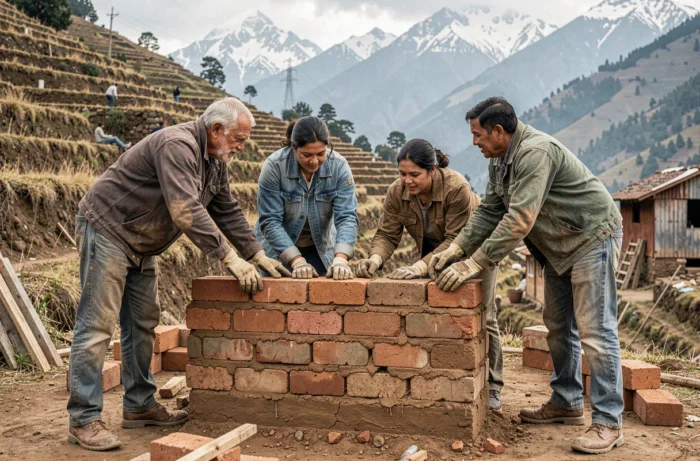
Linking solidarity tourism solely to stays in remote villages in Africa or Southeast Asia no longer reflects the reality of the sector. In Europe, community tourism takes forms that far exceed the rural or humanitarian framework.
According to a report by Planeterra published in September 2026, recent European initiatives include experiences led by migrants, neighborhood tours organized by residents, and projects to preserve local crafts. Social enterprises offer urban tours where former refugees guide visitors in the cities that welcomed them.
This shift broadens the target audience. Solidarity tourism is no longer just aimed at travelers seeking distant change of scenery. It also concerns destinations in France or neighboring countries, with short formats (a day, a weekend) that make the approach accessible without requiring additional leave.
Criteria for identifying a reliable community tourism project
- Residents participate in designing the tourism offer, not just in its execution. A local guide employed by a foreign tour operator does not qualify as community tourism.
- An identifiable portion of the stay price feeds into a collective fund whose use is decided locally, with a transparency mechanism (annual report, monitoring committee).
- The project exists independently of tourist flow: it does not disappear if visitors stop coming for a season.
Local governance and sustainable destinations: the case of Gaspé
The city of Gaspé, in Quebec, provides a concrete example of tourism governance led with residents. Its sustainable destination strategy, developed from a consultation conducted in 2024 and published in 2026, includes a local monitoring committee, diversification of the off-season offer, and coexistence between residents and visitors.
This model illustrates a broader trend: residents become co-decision-makers in tourism policy, not just beneficiaries or extras. The difference from a classic “sustainable” label lies in this direct involvement in decision-making (number of visitors accepted, types of accommodation allowed, opening calendar).
For the traveler, identifying this type of governance is a more reliable indicator than a logo on a brochure. A project where the local community sits on the steering committee offers more guarantees than a certification awarded by an external body without on-the-ground follow-up.
Distinguishing solidarity tourism, ecotourism, and ethical tourism
These three terms are often used interchangeably, which confuses travelers’ choices. Their scopes, however, are distinct.
| Approach | Central priority | Concrete mechanism |
|---|---|---|
| Solidarity tourism | Economic redistribution to communities | Local development fund fed by the travel price |
| Ecotourism | Environmental protection | Stays in natural settings, limiting ecological footprint |
| Ethical tourism | Respect for human rights and cultures | Codes of conduct, consent from visited populations |
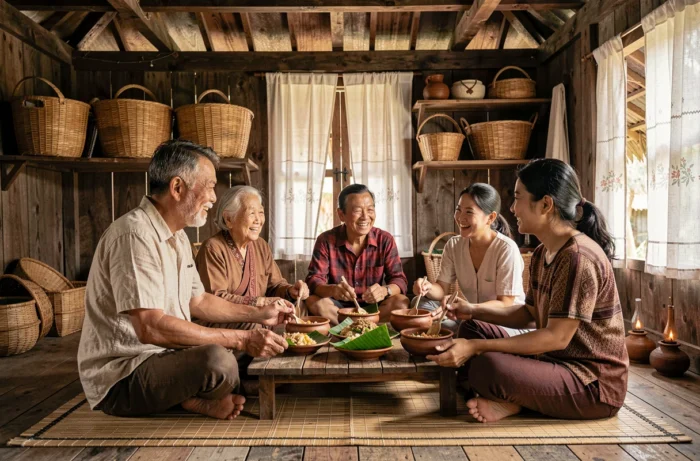
A trip can combine these three dimensions, but the absence of direct financial redistribution excludes the term “solidarity”. Staying with locals without a collective mechanism in place for the community falls under responsible tourism, not solidarity tourism in the strict sense.
Warning signs of solidarity greenwashing
- The operator highlights photos of local encounters without detailing the financial mechanism or the percentage returned.
- The “solidarity” project is actually managed entirely from the home country, with no identifiable local contact.
- Testimonials come solely from the agency’s website, without mentioning a verifiable associative or community partner.
Solidarity tourism is not just a generous intention added to a standard circuit. Its effectiveness relies on governance, redistribution, and monitoring mechanisms that transform the relationship between visitor and territory. Checking these mechanisms before booking remains the most concrete action to distinguish real commitment from a commercial argument.