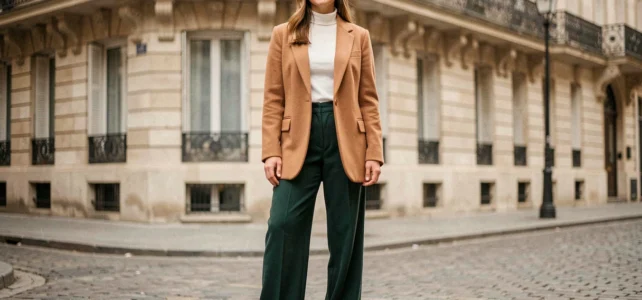
The fashion trends for the autumn-winter 2026 season are built on a dual movement: structured silhouettes inherited from the spring-summer runways and a European regulatory framework that redefines what “dressing well” means. Since July 19, 2026, major fashion companies in the European Union can no longer destroy their unsold clothing, shoes, and accessories. This change pushes brands towards resale, repair, and recycling, gradually altering the available offerings in stores.
Textile Traceability and Digital Product Passport: What Changes for the Consumer
The Digital Product Passport entered an operational phase in 2026 at the European level, with compliance expected for textiles in the coming years. Specifically, each garment will ultimately carry a digital identity card detailing its composition, the origin of its materials, and its end-of-life options.
For those seeking a stylish look this season, this evolution has a direct consequence: labels become readable. Gone are vague mentions. Brands making environmental claims without evidence are subject to sanctions, as the EU strengthens the obligation to justify terms like “eco-friendly” or “green” in 2026.
Choosing a traceable piece is no longer a militant gesture; it’s a reflex of an informed consumer. This transparency also allows for the identification of higher-quality materials, resulting in clothing that lasts longer and retains its shape, a criterion rarely highlighted in trend guides but crucial for a coherent wardrobe. The fashion inspirations offered on the fashion section of Niraj Web integrate this logic of durable and well-cut pieces.
Autumn-Winter 2026 Trend Colors: Burgundy, Chocolate, and Khaki
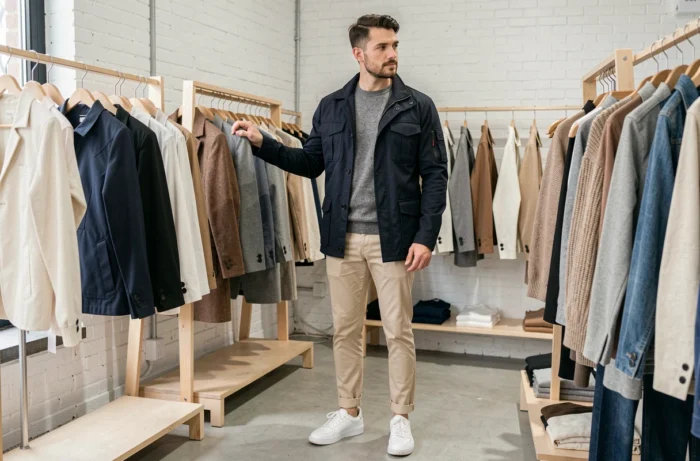
The season’s palette is organized around three axes. Burgundy stands out as the key color, present on blazers, knits, and accessories. Chocolate and ecru serve as new neutrals, replacing classic beige with more depth. Khaki completes this range by adding a more rugged touch.
These shades share a common point: they combine effortlessly with each other. An ecru sweater worn under a burgundy blazer with chocolate pants creates a complete outfit without resorting to prints. It’s a block color approach that simplifies the composition of a look.
- Burgundy works as a statement piece (blazer, midi skirt, bag) or in a total look for the bolder
- Chocolate and ecru serve as neutral bases and advantageously replace black in office outfits
- Khaki adds contrast to casual pieces (parkas, cargo pants, utility jackets)
Focusing on two or three close colors creates a more sophisticated effect than a mix of mismatched pieces. Color coherence remains the most accessible lever for enhancing an outfit without changing wardrobes.
Key Fashion Pieces: Blazer, Straight Jeans, and Midi Skirt
Rather than listing a dozen garments, three pieces deserve special attention this season because they cover most everyday situations.
The Structured Blazer
The blazer remains the most versatile piece in the wardrobe. This season, the cuts are slightly longer, with defined shoulders without excess. A well-cut blazer transforms jeans and a t-shirt into a presentable outfit in less than thirty seconds. In burgundy or chocolate, it fits directly into the season’s palette.
The Straight Jeans
After several seasons dominated by wide cuts and barrel jeans, straight jeans return as a reliable choice. Its more fitted cut at the thigh and straight down to the ankle offers a balance between comfort and structure. It pairs well with both ankle boots and sneakers.
The Midi Skirt
The midi skirt, worn below the knee, serves as an alternative to pants for mid-season. Versions in knit or fluid fabric dominate the collections. Paired with a fine-knit sweater and boots, it creates a complete back-to-school outfit.
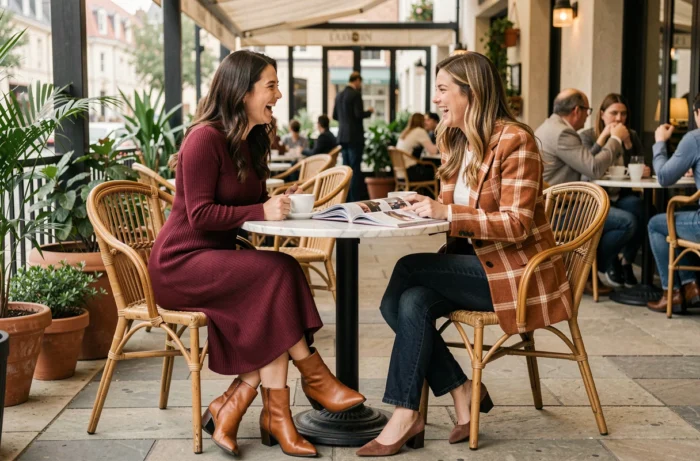
Materials and Prints: Thick Knit, Mixed Linen, and Graphic Patterns
The materials of the season prioritize touch and durability over time. The thick knit remains the common thread of the autumn-winter collections, appearing in sweaters, vests, and even skirts. Blends containing linen provide a more raw texture, suitable for layering pieces like overshirts.
On the print side, graphic patterns (wide stripes, reimagined checks) take over from spring flowers. These prints work best on a single piece of the outfit, with the rest kept in solid colors to avoid visual overload.
- Ribbed knit adds dimension to basic pieces (sweaters, cardigans) without adding a pattern
- Linen-cotton or linen-wool blends offer a more natural drape than 100% synthetic materials
- One print per outfit is sufficient: on the shirt or on the skirt, not both
Prioritizing materials with clear compositions becomes even more relevant with the gradual introduction of the digital product passport, which will make this information systematically accessible.
Sustainable Fashion and the End of Unsold Goods: A Wardrobe That Changes Logic
The ban on destroying unsold goods, effective since July 2026, pushes brands to produce more precisely. Collections are tightening, and restocks are becoming more targeted. For consumers, this means pieces may sometimes be available in more limited quantities, but also a significantly expanding second-hand offering.
The extended producer responsibility places the end-of-life cost of garments directly on brands. This mechanism encourages the design of repairable and recyclable pieces, resulting in more refined finishes on mid-market ranges.
Adopting a stylish look this season no longer relies solely on choosing the right colors or cuts. The quality of craftsmanship, traceability of materials, and durability of pieces have become full-fledged style criteria. A well-constructed burgundy blazer, worn for three seasons, will always have more appeal than a disposable piece replaced every two months.