
The brush cutter market covers a broad spectrum, from small electric machines for edging to professional petrol models capable of tackling dense brambles. Choosing the right model depends on familiar technical criteria: power, cutting system and motor type. Yet one factor is underestimated by most buying guides: local restrictions linked to fire risk, which may prohibit the use of certain equipment at certain times of year.
Local restrictions and fire risk: what to consider when choosing a brush cutter
Legal brush-clearing requirements have expanded to new areas in recent years. The rule often summed up as “clear brush within a 200-metre radius” actually defines the areas where the requirement may apply; it does not mean that every plot within that radius requires the same treatment.
The ONF recommends carrying out major brush-clearing work in winter. In summer, the use of tools that could produce sparks may be restricted, depending on the department and the level of risk. Prefectural orders set out local requirements: in Bouches-du-Rhône, for example, the use of certain equipment is regulated during periods of high risk.
This can make a significant difference to your choice of equipment. Property owners in areas subject to these restrictions would be wise to have an electric or battery-powered brush cutter alongside a petrol model, so they can still work when combustion engines are prohibited. Checking the local prefectural guidance before buying helps avoid ending up with a machine that cannot be used for several months of the year.
The requirement may also extend beyond the boundaries of your own property. If a building is affected, the owner may have to clear brush on part of a neighbouring plot, after informing the neighbour and requesting permission to access the land. The technical specifications available on ma-debroussailleuse.com detail the features of each model, helping you choose a tool suited to the work actually required by regulations.
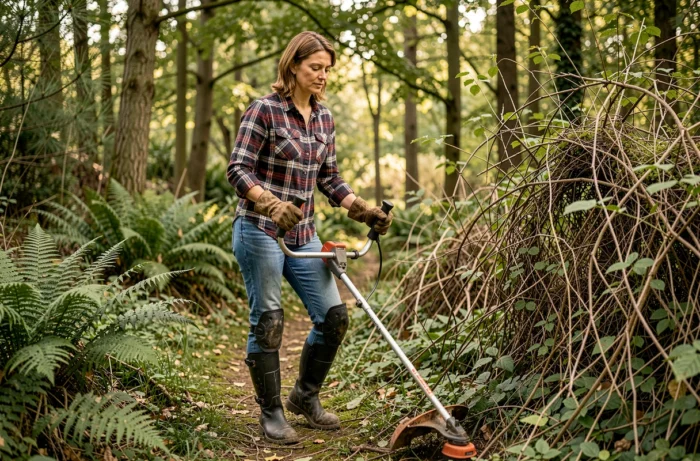
Petrol or electric brush cutter: choosing based on the terrain and vegetation
The motor type is the first key consideration. Petrol models, powered by a petrol-oil mixture, deliver more power and are suited to large areas covered in dense vegetation (brambles, scrub and tall grass over a metre high). Their runtime is limited only by the fuel tank.
Corded electric brush cutters run quietly and produce no emissions, making them suitable for smaller gardens. Their range depends on the length of the cable. Battery-powered models are becoming more powerful every year, but their runtime is still shorter than that of a petrol engine for extended work.
- Steep or uneven terrain with brambles and woody shoots: choose a backpack-style petrol model, which distributes the weight and leaves your arms free to cut across slopes.
- A flat garden of a few hundred square metres with tall grass and annual plants: a corded or battery-powered electric brush cutter will be sufficient, fitted with a nylon line cutting head.
- A plot in an area subject to summer restrictions on combustion-powered tools: choose a battery model capable of meeting brush-clearing requirements without sparks or exhaust fumes.
Line, blade or brush knife: match the cutting head to the job
The cutting system determines what the machine can tackle. Nylon line is suitable for grass and soft-stemmed plants, up to a certain stem thickness. It wears quickly on woody vegetation and throws debris at high speed, so protective gear (a face shield and leg guards) is essential.
A toothed metal blade or brush knife can handle brambles, young shrub shoots and semi-woody vegetation. These are highly effective on stems over one centimetre in diameter. However, they need regular sharpening and are more likely to kick back when they hit stones.
Often overlooked: brush clearing is not land clearing
Regulatory brush clearing does not mean stripping the land bare. The aim is to reduce combustible vegetation and create gaps between plants. A brush cutter is no substitute for pruning, removing or shredding the cut material. Local requirements may specify the cuts needed, which can help determine the right cutting tool.
Using a three-tooth blade just to maintain tall lawn grass is overkill. Conversely, trying to tackle a bramble patch that has been growing for three years with nylon line is a waste of time. Identifying the type of vegetation before buying helps avoid costly mistakes.
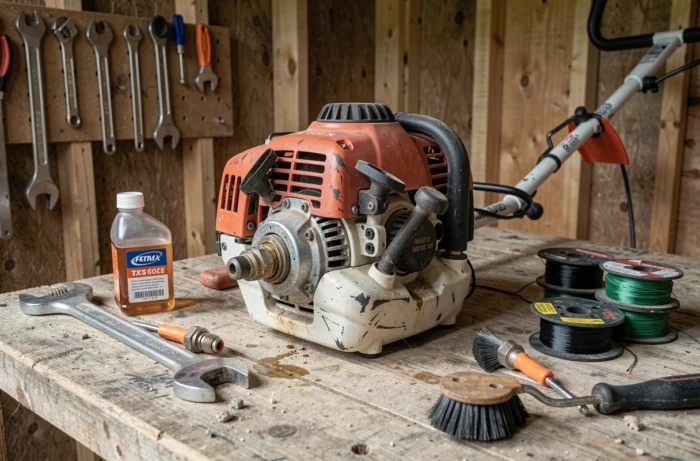
Brush cutter maintenance: steps to extend the life of your machine
Maintenance affects both the machine’s lifespan and its safe operation. On a petrol model, three areas need regular attention:
- The air filter: clean it after every extended session and replace it as soon as it shows signs of clogging. A dirty filter reduces power and increases fuel consumption.
- The spark plug: check it at the start of the season. Carbon deposits can prevent the engine from starting or cause it to misfire.
- The cutting system: sharpen the blade every five to ten uses and replace the nylon line as soon as it becomes too short to cut effectively.
For electric and battery-powered models, maintenance mainly involves cleaning the guard, checking the connections and storing the battery in a dry place at a moderate temperature between seasons.
One final technical point concerns fuel for petrol models. Alkylate petrol reduces toxic emissions and causes less engine fouling than a standard fuel mixture, extending the intervals between maintenance.
Choosing a brush cutter is about more than power or price. Local regulations, the vegetation actually growing on the plot and the time of year when the work needs to be done all combine to point towards a specific model. Checking your local prefectural orders before buying is the most worthwhile step you can take, well before comparing technical specifications.